
IMMEDIATE RELEASE: Senior Research Fellow and Research Coordinator of the India-based Tibet Policy Institute, Dr Tenzin Desal, will spotlight the geopolitical and environmental significance of Tibet during his week-long visit to the country this week.
During his visit from 14 – 18 September, Dr Desal will address the Australian Institute of International Affairs, ACT Branch on the topic, ‘Roof of the World: The Geopolitical and Environmental Significance of Tibet,’.
He will also participate in a panel discussion hosted by the United States Studies Centre in Sydney on the topic ‘Tibet at the Epicentre: Geopolitics, Religion and Climate Security,’ and provide a briefing to the The Australian All-Party Parliamentary Group for Tibet (AAPGT) in Canberra, among other engagements before departing for New Delhi on 19 September.
Despite the emergence of China as a global power, it continues to view the Tibet issue as non-negotiable. It presents the Tibet-China conflict as one of its core concerns, thereby tying it to national sovereignty, territorial integrity, and even the survival of the communist regime’s grip on power.
Since the 19th Party Congress, China’s unrelenting measures to tighten its grip over Tibet have been visible in both public pronouncements and policy decisions. It has since rolled out measures that seek to assert Party rule over every sphere of the social and cultural life of the Tibetan people.
In the last decade, China has systematically enrolled two-thirds of Tibetan children in state-run boarding schools, which operate on a model strikingly similar to colonial schools in settler-colonial history.
The region is also on the frontline of global climate change.
IPCC reports have forewarned of the accelerated impact of global climate change on Tibet and adjacent Himalayan regions. In the wake of these entangled issues, Tibet presents a unique ecological, geopolitical, and—more pertinently—a defining moral challenge to the international community.
Dr Tenzin Desal’s visit is organised by the Office of Tibet, Australia, New Zealand and Southeast Asia.
Dr Tenzin Desal is available for media interviews between 14 – 18 September.
Media Contact
Representative Karma Singey
Office of Tibet, Australia, New Zealand and Southeast Asia
ACT, Canberra
0426 642 175
rep.au@tibet.net
EVENT INFORMATION
Tibet at the Epicentre: Geopolitics, Religion and Climate Security
Hosted by Dr Michael Green, CEO USSC
📅 Monday 14 September 2026
⏰ 6:00 – 7:30pm AEST
Level 5 Function Room
The Michael Spence Building (F23)
University of Sydney
Camperdown, NSW
Registration essential at: https://tinyurl.com/4abhp42w
Roof of the World: The Geopolitical and Environmental Significance of Tibet (hybrid event)
Hosted by Dr Claude Rakisits, President of AIIA (ACT Branch)
📅 Wednesday 16 September 2026
⏰ 7:00 – 8:00pm AEST
Australian Institute of International Affairs, Canberra
AIIA National Conference Centre
Stephen House, Deakin ACT
For in-house attendees, pre-presentation drinks and nibbles will be available from 6:30pm.
Register at: https://tinyurl.com/2sbvkpad
###
ENDS
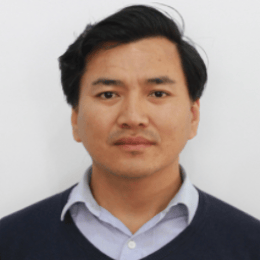
Bio Dr. Tenzin Desal
Dr Tenzin Desal is a Senior Research Fellow and Research Coordinator at the Tibet Policy Institute, Dharamsala, and editor of the Tibet Policy Journal. He holds a PhD in Anthropology from the University of Mysore. His research focuses on development in Tibet and China’s ethnic policy, with broader interests in ethnic relations, cartography, and Tibetan history. His writings examine China’s policies in Tibet, religious freedom, ethnic unity, infrastructure development, and the environmental and geopolitical implications of these policies.
About the Tibet Policy Institute
The Tibet Policy Institute is a research center of the Central Tibetan Administration, located in the pristine hill of Dharamshala, Himachal Pradesh, India. It was formally inaugurated by Sikyong Dr. Lobsang Sangay, the democratically elected political leader of Tibetan people on 15 February 2012. The TPI strives to serve as an intellectual hub for Tibetan scholars across the globe and to become an internationally acclaimed platform for Tibetan scholars to articulate their argument on the issues concerning Tibet that will shape the perception of the international community and the policies of the various governments regarding Tibet and the Tibetan people. The TPI also serves as a think tank to help the Kashag of the Central Tibetan Administration (CTA) to identify potential prospects and problems for Tibet and the Tibetan people and offer possible solutions for the Kashag to make optimum use of the potential prospects or to effectively meet the potential challenges.
📷 Featured: Free Tibet (Larung Gar)/Tibet Policy Institute
Discover more from
Subscribe to get the latest posts sent to your email.

