
The UN International Day in Support of Victims of Torture on 26 June marks the moment in 1987 when the UN Convention Against Torture and Other Cruel, Inhuman or Degrading Treatment or Punishment, one of the key instruments in fighting torture, came into effect.
Today, there are 173 State parties to the Convention, yet despite the absolute prohibition of torture under international law, torture still persists in more than 140 countries around the world according to the International Rehabilitation Council for Torture Victims (IRCT).
“Under the UN Convention against Torture all States are obliged to investigate and prosecute allegations of torture, as well as cruel, inhuman or degrading treatment; and they must prevent torture by every possible means,” said Volker Türk, UN High Commissioner for Human Rights on 26 June, 2023.
“Yet in almost all cases, the people who ordered and commit the crime of torture escape justice.”
Since 1999, a major human rights document, the Istanbul Protocol (IP) has set international standards for investigation and documenting cases of torture and ill treatment.
The revised (2022 edition) of the IP was six years in the making, involving thousands of hours of voluntary work by 180 experts from more than 50 countries. Building on years of experience using this document in practice, medical practitioners and academics worldwide collected their experiences, identified good practices and highlighted the lessons learned from its use.
Following the recent launch of the revised edition, a worldwide invitation was extended to States to make it an essential part of training for all relevant public officials, health and medical professionals.
Supporting survivors of torture and fighting for justice is often very risky.
Many of our colleagues in the field work under increasingly repressive circumstances in parts of the world where financing is blocked, personal safety is threatened, and their work is de-legitimised.
Every year on the 26th of June, the survivors of torture and the professionals and civil society groups who work to support them are acknowledged worldwide.
We stand in solidarity with them.
Published in Issue 37, Refugee Transitions, 2023.
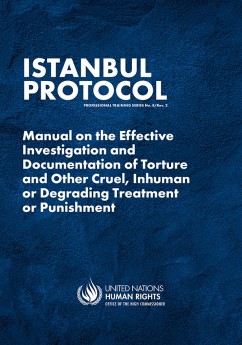
Learn more at: https://irct.org/istanbul-protocol/
Relying on multi-sectoral engagement, specialised global expertise and practical experiences of law, health and human rights professionals in the field, including members of United Nations anti-torture mechanisms, the revised and updated (2022 edition) seeks to fortify the implementation of international norms and preventive tools to assist survivors of torture worldwide. The Istanbul Protocol and the accompanying “Istanbul Principles” also serve as a global standard against which the delivery of expert legal and medical evidence can be benchmarked in the investigation and prevention of torture.
The 2022 edition of the Istanbul Protocol is available in all six official United Nations languages on the website of the Office of the United Nations High Commissioner for Human Rights.
Discover more from
Subscribe to get the latest posts sent to your email.
 bravemediaaus.com